Category: Blog

  • The Cost of Indecision in Business: How to Stop Overthinking and Take Action

    The Cost of Indecision in Business: How to Stop Overthinking and Take Action

    You can lose money without spending a rupee.

    You may have an offer you never launch, a person you never contact, or an idea you never share. You keep waiting for the right time. Meanwhile, the chance to learn or earn may pass.

    If you are a coach, professional, or expert, this may sound familiar. You have useful skills. You want to do good work. But when it is time to publish a post, tell people about your service, or set a price, you think, “I need a little more time.”

    Thinking carefully is good. But you do not need an answer to every possible question before you take a small step.

    What does waiting cost you?

    Waiting can cost you an opportunity. It can also cost you something less obvious: the chance to learn.

    Imagine spending six weeks creating a course without talking to the people you want to help. You may finish the course and then discover that they need help with a different problem. A few conversations at the start could have helped you understand them better.

    Or imagine waiting to post online until you have planned a whole year of content. During that time, you do not learn which topics interest your audience. One useful post could give you a place to start.

    Waiting can affect your confidence, too. The longer you put off a small task, the bigger it may feel. You may start to believe you are not ready. In reality, you may simply need to try something and see what happens.

    What chess taught me about decisions

    When I coached my daughters in chess, I learned an important lesson: you cannot know every move that will happen in a game.

    A good player looks at the board, thinks about the options, and makes the best move they can. Then they see how the other player responds and decide what to do next.

    Business works in a similar way. You cannot always be certain of the result. You can make a thoughtful move, look at what happens, and adjust.

    Give big decisions more time than small ones

    You do not need to make every decision quickly.

    If you are making a large investment or signing an important agreement, take time to research it. Ask for advice when you need it.

    But some actions are easy to change. You can publish a post, talk to a few potential clients, or run a short trial session. If it does not go as planned, you can learn from it and try again.

    Ask yourself: If this does not work, how easy will it be to change my approach?

    Let the answer guide how much time you spend deciding.

    Try a small step

    If you have been thinking about an idea for a long time, ask yourself these three questions:

    1. What do I know now? Think about what you have seen or heard for yourself. Then notice what you are only guessing. For example, you may know that clients ask about procrastination. You may only be guessing that they want a twelve-week course about it.
    2. What is one small step I can take? You could speak to five potential clients, offer a short trial session, or write one post about the problem you help people solve.
    3. What can I learn from that step? Listen to the words people use. Notice their questions. See whether they want to spend time or money on a solution.

    Choose a step that feels manageable and that you can afford to try. You do not need a big launch to begin learning.

    At the end of the week, write down what happened. What did people say? What surprised you? What would you change next time? Be honest, but do not judge yourself. Even when a first attempt does not work, it can help you make a better next decision.

    Choose one decision this week

    Think of one decision you have been putting off. Decide when you will make it. Give yourself more time if the risk is high, and less time if the step is small and easy to change.

    You could speak to five potential clients before creating fifty lessons. You could publish one post before planning a year of content. You could invite a few people to try a short program before building a large one.

    Taking action will not remove all uncertainty. It can give you information that helps you decide what to do next.

    What decision have you been putting off? What small step could you take this week? Share your answer in the comments.


  • Scarcity Can Survive Success: How to Change Your Money Questions

    Scarcity Can Survive Success: How to Change Your Money Questions

    A higher income can improve your circumstances without changing the way you think about money.

    You may earn more than you did a few years ago and still feel that one mistake could undo everything. You might hesitate to invest in a useful skill, share an idea, or try a new opportunity—even when you have the resources to take a measured step.

    I have met people with modest means who were generous and creative. I have also met financially comfortable people who remained afraid to spend, invest, or try anything unfamiliar. Their situations were different, but their bank balances did not tell the whole story.

    Scarcity can survive success.

    What Is a Scarcity Mindset?

    A scarcity mindset is a repeated way of paying attention to what might be lost, missing, or unavailable. Financial pressure can make this response understandable. When money is tight, it is sensible to watch expenses and consider risks carefully.

    The difficulty comes when the same questions keep guiding your decisions even as your options change:

    • “What if I fail?”
    • “What if I lose everything?”
    • “Why would anyone pay me?”
    • “What if I am not ready?”

    These questions can help you identify a real risk. But if they are the only questions you ask, you may overlook your skills, relationships, available support, and opportunities to learn.

    Prosperity Thinking Is Grounded in Reality

    Prosperity thinking does not mean pretending that financial difficulty is imaginary. Gratitude does not pay a bill, and optimism alone does not make an investment wise.

    A grounded prosperity mindset acknowledges the constraint and then looks for a constructive response:

    • What expense can I review or reduce?
    • What skill would help me earn or serve more effectively?
    • Is there something I can negotiate?
    • Whose problem am I equipped to solve?
    • What small experiment can I try before making a larger commitment?

    You can be honest about risk and still believe that your next decision matters.

    Change the Question Before You Change the Decision

    The questions you repeat direct your attention. Your attention affects what you notice, and what you notice influences what you choose to do.

    For example, “Why would anyone pay me?” can leave you searching for reasons you are inadequate. “Whose problem am I equipped to solve?” encourages you to examine your experience, listen to people, and test whether you can provide value.

    The second question does not guarantee income. It gives you something useful to investigate.

    In the same way, replacing “What if I fail?” with “What can this test teach me?” does not remove the possibility of failure. It helps you design a smaller test, learn from the response, and improve your next attempt.

    A One-Week Practice

    For the next seven days, pay attention to one scarcity question that appears repeatedly in your mind. Write it down in plain language, without judging yourself.

    Then try these three steps:

    1. Name the real concern. What exactly are you afraid might happen?
    2. Ask a more useful question. What can you learn, influence, or test?
    3. Take one small action. Choose something you can do this week and review honestly afterward.

    Your action might be speaking with a potential client, reviewing an expense, asking for feedback, practising a skill, or testing a service idea. At the end of the week, record what happened. If the first attempt did not work, treat the response as information for your next decision.

    You do not need a dramatic transformation today. You need one visible action and an honest review.

    Your Next Decision Matters

    Scarcity says, “This is how things will always be.”

    A prosperity orientation asks, “Given where I am now, what can I influence next?”

    That change may seem small, but it can affect the decisions you repeat. Over time, those decisions can shape your financial direction.

    Which scarcity question will you replace this week? Share your answer in the comments.

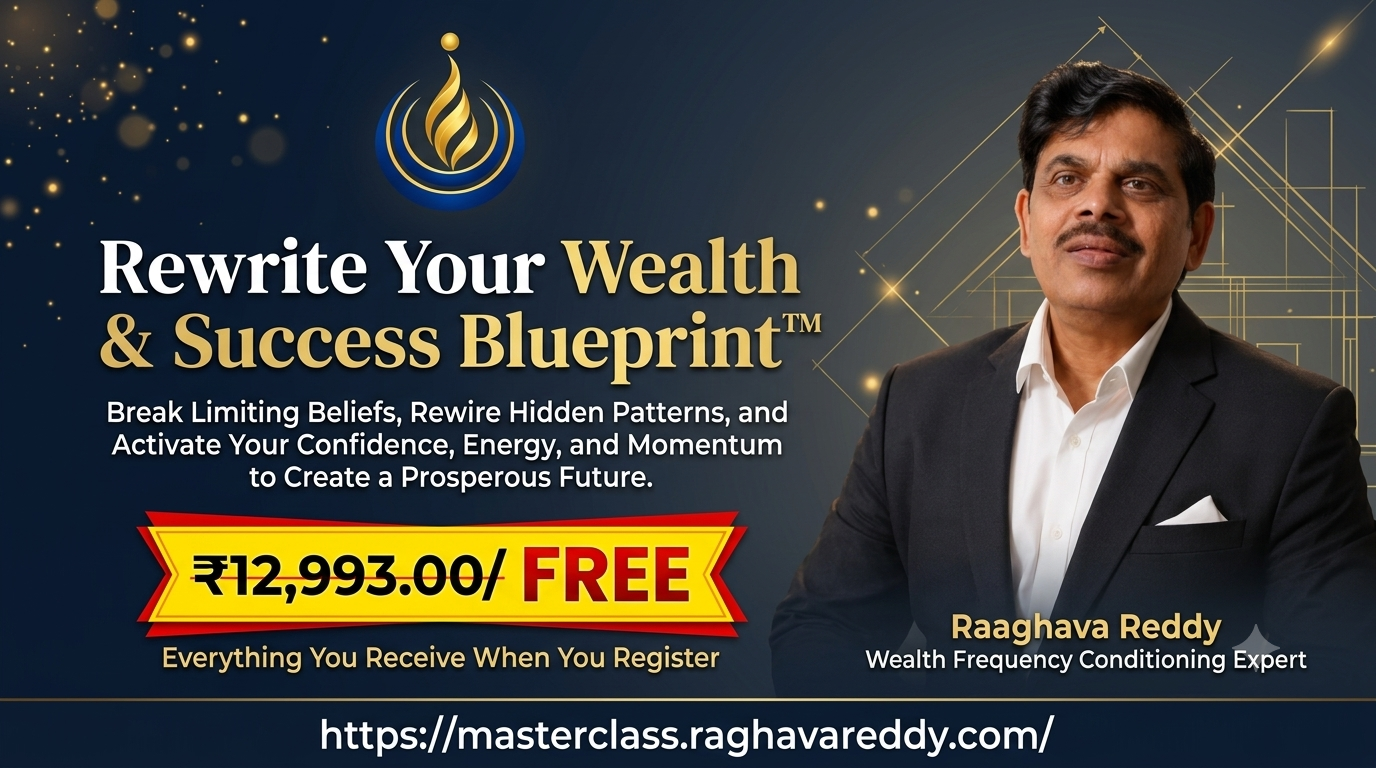
    If you would like to explore the beliefs and patterns influencing your wealth and success, learn more about my free Rewrite Your Wealth & Success Blueprint™ Master Class at masterclass.raghavareddy.com.

    Raaghava Reddy
    Wealth Frequency Conditioning Expert


  • Your Income Follows Identity

    Your Income Follows Identity


    Your Income Follows Identity: The Small Decisions Behind Financial Growth

    Why do capable people sometimes struggle to earn in proportion to the value they offer?

    A coach develops a valuable programme but hesitates to announce the price. A professional has a useful idea but waits months to publish it. An expert keeps taking courses while postponing the offer they are ready to launch.

    They may have the skills. They may even have a clear goal. Yet, at the moment of action, an old belief steps in: Who am I to charge that much? What if people judge me? What if I fail?

    This is where identity deserves our attention.

    “Your income follows identity” does not mean that mindset alone determines your earnings. Market conditions, opportunity, skills, relationships, and practical decisions matter. But your view of yourself can influence what you attempt, what you avoid, and what you repeat. Over time, those choices can affect your results.

    What Is Wealth Identity?

    Your wealth identity is the picture you hold of yourself in relation to earning, receiving, managing, and using money.

    It appears in everyday questions:

    • Can I explain the value of my work clearly?
    • Can I state a fair price without apologising?
    • How do I respond when someone says no?
    • Do I follow through on the work that could grow my income?
    • Can I manage what I earn responsibly?

    You may consciously want a higher income while still feeling uncomfortable with the actions that could help you build one. That tension can make a bigger goal feel exciting in private and frightening in practice.

    How an Old Identity Shows Up

    Identity rarely announces itself with the words “I am holding you back.” It often sounds reasonable:

    “I’ll publish when the idea is perfect.”
    “I should study a little more before I launch.”
    “I’ll lower my price so they won’t reject me.”
    “I’ll have that conversation next week.”

    Any one of these choices may make sense in a particular situation. The question is whether it has become a repeated pattern.

    For example, learning is valuable. But if you always choose another course instead of making an offer, learning may have become a way to delay a difficult step. Being flexible on price can be wise. But if you reduce it before a client has even responded, you may be acting from fear rather than a deliberate decision.

    The aim is to notice the pattern without judging yourself.

    Build a New Identity Through Evidence

    A new identity does not require you to pretend you are confident all the time. It grows when you repeatedly do what the person you want to become would do.

    Start a simple evidence record. At the end of each day, write down one action that reflects the identity you are building:

    • “I sent the proposal I had been delaying.”
    • “I stated my price clearly.”
    • “I saved a planned amount before spending.”
    • “I shared one useful idea publicly.”
    • “I followed up respectfully after hearing no.”

    These actions may look small. That is precisely why you can repeat them. Your record gives you something concrete to review when self-doubt returns.

    Try One Identity-Aligned Action Today

    Ask yourself:

    “If I were already a person who creates and manages wealth responsibly, what is one decision I would make today?”

    Choose an action you can finish. Publish a helpful post. Complete a proposal. Review your expenses. Contact a potential client. Set aside time for the work that directly supports your goals.

    Then record what happened. If the result was disappointing, treat it as information. What could you improve next time? Your identity grows through honest practice, including attempts that do not go as planned.

    You do not need a dramatic transformation this week. Look for one decision you can repeat and one piece of evidence you can review.

    A Question Worth Asking

    It is natural to ask, “How can I earn more?”

    Also ask: “Who am I becoming as I create, manage, and use greater wealth?”

    Your answer is built through your daily behaviour: the conversations you have, the value you share, the promises you keep, and the way you respond when things are difficult.

    Complete this sentence for yourself:

    My next-level wealth identity consistently ____________________.

    If you feel comfortable, share your answer in the comments. It may help someone else take their next step.

    Raaghava Reddy
    Wealth Frequency Conditioning Expert
    www.raghavareddy.com


  • Stop Climbing the Wrong Mountain

    Stop Climbing the Wrong Mountain: The Most Expensive Mistake Entrepreneurs Make

    A few years ago, I had a conversation that I haven’t forgotten.

    An entrepreneur looked at me and said,

    “Coach, my business is growing… but I don’t feel successful anymore.”

    He wasn’t struggling financially.

    His company was profitable.

    People admired what he had built.

    From the outside, everything looked impressive.

    But on the inside, something was missing.

    After a long conversation, I asked him one question:

    “If you had to start over today, would you choose this business again?”

    He didn’t answer immediately.

    After a long pause, he quietly said,

    “No.”

    That moment reminded me of a powerful lesson.

    Many people don’t fail because they lack talent.

    They fail because they spend years climbing the wrong mountain.

    And here’s the difficult truth:

    Working harder doesn’t help if you’re heading in the wrong direction.

    Over the years, while coaching entrepreneurs, business owners, and professionals, I’ve noticed that the people who build extraordinary businesses don’t chase every opportunity.

    They choose opportunities that align with who they are.

    Here are three lessons that have shaped my own thinking.

    1. Don’t Choose a Business Because It’s Trending

    Every year brings a new “gold rush.”

    AI.

    E-commerce.

    Digital marketing.

    Coaching.

    Crypto.

    Real estate.

    There is nothing wrong with any of these industries.

    The mistake is believing that someone else’s opportunity automatically becomes yours.

    Before asking,

    “Can this business make money?”

    Ask,

    “Does this business fit me?”

    A few questions worth reflecting on:

    • Does this work genuinely energize me?
    • Am I curious enough to keep learning about it for years?
    • Would I still enjoy building it if success took longer than expected?
    • Does it align with the kind of life I want to create?

    The goal isn’t to find the most popular opportunity.

    The goal is to find the opportunity where you can make your greatest contribution.

    1. Your Greatest Competitive Advantage Is Alignment

    I’ve met highly intelligent people who struggled in businesses that didn’t match their natural strengths.

    I’ve also met ordinary people who achieved extraordinary success because they built around what they naturally do well.

    Alignment happens when four things come together:

    • ❤️ Passion – What gives you energy?
    • 💪 Strengths – What are you naturally good at?
    • 🌍 Problem – What meaningful challenge can you solve?
    • 📈 Opportunity – Is there genuine market demand?

    When these four align, something remarkable happens.

    Decision-making becomes easier.

    Marketing feels more authentic.

    Clients trust you more.

    And work becomes deeply meaningful.

    Success stops feeling like a constant struggle because your business becomes an extension of who you are.

    1. Build a Mission, Not Just a Business

    This is perhaps the biggest mindset shift I’ve experienced.

    Businesses sell products and services.

    Missions transform people.

    One question changed the way I think about entrepreneurship:

    “How do I want people’s lives to be different because my business exists?”

    That question moves the focus away from transactions and toward transformation.

    When your business is driven by contribution:

    • You build stronger relationships.
    • You create greater trust.
    • You make better long-term decisions.
    • You attract people who believe in your vision, not just your offer.
    • You create a legacy that extends beyond revenue.

    Profit is essential.

    Every healthy business needs it.

    But profit is strongest when it is the result of consistently creating meaningful value.

    A Personal Reflection

    Throughout my journey, I’ve come to believe that our greatest responsibility isn’t simply to become successful.

    It’s to become the person capable of creating meaningful impact.

    Business is one of the most powerful vehicles for that transformation.

    The business you build shapes the leader you become.

    That’s why choosing the right opportunity matters so much.

    Don’t build a business because everyone else is doing it.

    Build one that reflects your values, develops your strengths, challenges you to grow, and genuinely improves other people’s lives.

    Because at the end of your career, people won’t remember how many trends you followed.

    They’ll remember the difference you made.

    One Question for You

    If you could start your career or business again today…

    Would you choose the same path? Why or why not?

    I’d genuinely love to hear your perspective.

    Your answer may inspire someone else who is standing at a crossroads today.

    If this message resonated with you, please like, repost, or share it with someone who is exploring their next business opportunity.

    If you’re ready to align your passion, strengths, and business into one meaningful mission, I invite you to join my FREE Human Potential Master Class, where I’ll share practical frameworks to help you build a business that creates both impact and fulfillment.

    Success isn’t about climbing faster.

    It’s about making sure you’re climbing the right mountain.

    — Coach Raghava Reddy
    Human Potential Coach
    www.humanpotentialmasterclass.com

    @coachraghavareddy2.0

    #HumanPotential

    right business opportunity, how to choose a business, entrepreneur mindset, purpose driven business, business ideas, business strategy, entrepreneurship, startup advice, human potential, leadership development, personal growth, business growth, mindset coaching, coach raghava reddy, institute of human excellence, business mission, passion and purpose, business opportunities, self leadership, success mindset

  • Align Passion, Strengths & Business into One Mission

    How to Align Your Passion, Strengths, and Business into One Meaningful Mission

    The Ultimate Guide for Entrepreneurs

    Author: Coach Raghava Reddy
    Human Potential Coach, Institute of Human Excellence

    Hyderabad, TG, India.

    ========================================================================

    Introduction

    Imagine waking up every morning feeling successful on paper but empty inside.

    Your business is growing. Clients are coming. Revenue is increasing. Friends admire your achievements. Yet, when you look in the mirror, a quiet question keeps returning:

    “Is this really what I was meant to do?”

    Raj was a successful entrepreneur who had built a profitable consulting business. He worked 12-hour days, earned a comfortable income, and had all the external signs of success. But every Sunday evening, he felt a heaviness he couldn’t explain.

    One day, while mentoring a young entrepreneur, something unexpected happened. He realized that the hour he spent helping someone discover their potential brought him more joy than an entire week of closing business deals.

    That moment changed everything.

    Raj gradually redesigned his business around what he genuinely loved, what he naturally excelled at, and what created meaningful transformation for others. His income didn’t decline—it increased. More importantly, he woke up energized instead of exhausted.

    His work stopped feeling like work.

    It became his mission.

    This is the journey that many of the world’s most respected entrepreneurs have taken. They rarely separate their passion, strengths, and business. Instead, they integrate them into one meaningful mission that serves others while creating fulfillment and financial success.

    Whether you’re an entrepreneur, business owner, coach, consultant, or ambitious professional, the same opportunity is available to you.

    In this guide, you’ll discover a practical framework for aligning your passion, strengths, and business into a purpose-driven life that creates greater impact, fulfillment, prosperity, and lasting significance.

    Because true success isn’t simply about making a living.

    It’s about making a difference.

    Table of Contents

    1. Why Alignment Changes Everything
    2. What Passion Really Means
    3. Discovering Your Natural Strengths
    4. Understanding Your Core Values
    5. Finding Problems Worth Solving
    6. Creating Your Meaningful Mission Statement
    7. Building a Purpose-Driven Business
    8. Aligning Daily Actions with Your Mission
    9. Overcoming Internal Barriers
    10. Living a Legacy Beyond Success


    1. Why Alignment Changes Everything

    Many people chase success.

    Very few pursue alignment.

    There is a profound difference.

    Success is often measured by income, titles, possessions, or recognition. Fulfillment is the inner satisfaction that comes from doing work that reflects who you truly are. Significance is the lasting impact you leave on the lives of others.

    Think of these three levels as a pyramid:

    1. Success — What you achieve.
    2. Fulfillment — How you feel.
    3. Significance — The difference you make.

    Many entrepreneurs reach the first level but never experience the second or third. They become trapped in businesses that generate money but drain their energy.

    This explains why burnout affects even highly successful business owners. Long hours are not always the problem. Misalignment is.

    When your daily work doesn’t reflect your deepest values, strengths, and purpose, every task requires more emotional energy than it should.

    What Research Tells Us

    Research from Gallup consistently shows that individuals who use their strengths regularly are more engaged, productive, and satisfied at work. Similarly, organizations with a strong sense of purpose often experience higher employee engagement and stronger long-term performance.

    The Japanese concept of Ikigai also illustrates this idea beautifully. Ikigai is often described as the intersection of:

    • What you love
    • What you’re good at
    • What the world needs
    • What you can be paid for

    When these four elements overlap, work becomes deeply meaningful.

    Real-World Examples

    Steve Jobs didn’t simply build computers. He transformed how people interact with technology through elegant design.

    Oprah Winfrey didn’t build a television career alone. She built a mission centered on helping people grow emotionally and spiritually.

    Narayana Murthy didn’t merely establish an IT company. He created an organization rooted in ethics, innovation, and opportunity.

    Their businesses reflected who they were.

    That alignment became their competitive advantage.

    “The only way to do great work is to love what you do.” — Steve Jobs

    Practical Exercise: Your Alignment Score

    Rate yourself from 1 to 10 in each area:

    • Passion
    • Skills
    • Income
    • Impact

    Ask yourself:

    • Do I enjoy what I do every day?
    • Am I using my strongest abilities?
    • Does my business provide financial stability?
    • Am I creating meaningful change?

    If your scores vary widely, you’ve identified an opportunity for greater alignment.

    1. What Passion Really Means

    One of the biggest myths in personal development is that passion is something you magically discover.

    In reality, passion is often developed through curiosity, commitment, and consistent practice.

    Let’s distinguish a few important concepts.

    Interest

    Something you enjoy occasionally.

    Example: Reading books about psychology.

    Hobby

    An enjoyable activity without professional responsibility.

    Example: Photography on weekends.

    Passion

    An activity that energizes you and motivates continuous learning.

    Example: Coaching people to transform their lives.

    Calling

    A deep inner conviction that your work serves a purpose beyond personal gain.

    Mission

    A commitment to solving meaningful problems for others using your unique abilities.

    Notice the progression.

    Interest may become a hobby.

    A hobby may become a passion.

    A passion can evolve into a calling.

    A calling becomes a mission when it creates value for other people.

    Examples

    Athletes don’t become passionate simply by watching sports. Their passion grows through disciplined practice.

    Teachers discover their passion while seeing students succeed.

    Business founders often uncover their purpose by solving problems repeatedly for customers.

    Creators become passionate because they continue creating—even before recognition arrives.

    Passion grows where consistent effort meets meaningful contribution.

    Reflection Exercise

    Complete this sentence several times:

    “I lose track of time when…”

    Don’t overthink.

    Write whatever naturally comes to mind.

    Your answers often reveal the activities that energize you most deeply.

    Signs You’ve Discovered Genuine Passion

    • You willingly invest time in learning.
    • Challenges excite rather than discourage you.
    • People naturally seek your help.
    • You feel energized after doing the work.
    • You continue even when recognition is absent.
    • You experience a sense of flow.
    • Your enthusiasm inspires others.

    Passion isn’t merely excitement.

    It’s sustainable energy directed toward meaningful contribution.

    1. Discovering Your Natural Strengths

    Passion alone isn’t enough.

    You also need competence.

    The most successful entrepreneurs operate where passion meets exceptional ability.

    Talents vs. Skills

    A talent is something that comes naturally.

    A skill is something that can be learned.

    For example:

    Empathy may be a natural talent.

    Coaching techniques are learned skills.

    Public speaking can be learned.

    Connecting emotionally with an audience may be an innate strength.

    The goal isn’t simply becoming good at everything.

    The goal is becoming exceptional at what you naturally do best.

    Strengths vs. Competencies

    Competencies help you perform.

    Strengths help you excel.

    When you work from your strengths, you enter what psychologists call a flow state—a condition where you’re fully immersed, highly productive, and energized by the work itself.

    This is one reason strengths-based development has become such an important focus in leadership and coaching.

    Practical Exercise

    Create four columns:

    Skills

    • What have I learned?

    Talents

    • What comes naturally?

    Experiences

    • What life lessons have shaped me?

    Knowledge

    • What subjects do I understand deeply?

    Review your list carefully.

    Notice where patterns emerge.

    Those recurring themes often point toward your unique value proposition.

    Example

    A psychologist may realize that helping people overcome limiting beliefs feels effortless.

    Instead of offering generic consulting services, they build a coaching practice focused on mindset transformation.

    Their strengths become their business advantage.

    Feedback Exercise

    Ask five people you trust:

    “What do you think I’m naturally good at?”

    Don’t defend.

    Don’t explain.

    Simply listen.

    Others often recognize our strengths before we do.

    1. Understanding Your Core Values

    Your strengths determine what you can do.

    Your values determine what you should do.

    Values are the principles that guide your decisions, relationships, and priorities.

    Ignoring them almost always leads to dissatisfaction—even if your business is profitable.

    Consider these common values:

    • Integrity
    • Growth
    • Contribution
    • Freedom
    • Learning
    • Leadership
    • Compassion

    None is better than another.

    The important question is:

    Which values define you?

    Why Values Matter

    Imagine someone who deeply values freedom working in a business with rigid systems and constant supervision.

    Or someone who values contribution spending years selling products they don’t believe in.

    Eventually, internal conflict appears.

    Success without values creates stress.

    Success aligned with values creates fulfillment.

    Exercise: Identify Your Top Five Values

    From the list above—or your own—choose the five values you refuse to compromise.

    Now ask:

    • Does my current business reflect these values?
    • Which value is strongest?
    • Which value am I neglecting?

    Daily Values Alignment Checklist

    At the end of each day, ask yourself:

    • Did I act with integrity?
    • Did I continue learning?
    • Did I contribute to someone else’s growth?
    • Did today’s work reflect my purpose?
    • Am I becoming the person I want to become?

    Small daily decisions create lifelong alignment.

    1. Finding Problems Worth Solving

    Businesses don’t exist to sell products.

    Businesses exist to solve problems.

    The greater the problem you solve, the greater the value you create.

    This leads us to a simple but powerful framework.

    Passion

    What energizes you?

    Strengths

    What are you exceptionally good at?

    Market Need

    What problems are people willing to solve?

    =

    Purpose-Driven Business

    When these three elements intersect, you create work that is meaningful, valuable, and sustainable.

    Examples

    Airbnb solved the problem of affordable and authentic accommodation.

    Tesla addressed the need for sustainable transportation while proving electric vehicles could be desirable.

    Apple focused on making technology intuitive and beautifully designed.

    Patagonia built a successful business around environmental responsibility and quality products.

    Each company succeeded because it solved meaningful problems—not because it simply sold products.

    Research Insight

    Purpose-driven organizations consistently demonstrate stronger customer loyalty, higher employee engagement, and better long-term resilience than businesses driven solely by short-term profit.

    Purpose isn’t just inspiring.

    It’s practical.

    Practical Exercise

    Write down ten problems your ideal audience experiences.

    Then identify:

    • Which problems excite you to solve?
    • Which problems match your strengths?
    • Which problems have the greatest potential impact?

    The answers reveal where your business mission should focus.

    1. Create Your Meaningful Mission Statement

    Once you’ve identified your passion, strengths, values, and audience, it’s time to bring them together in one clear statement.

    A mission statement is not a slogan.

    It is a declaration of why your business exists.

    Use this simple framework:

    I help…

    Who…

    Achieve…

    Using…

    So they can…

    Examples

    Tony Robbins:
    “I help individuals and organizations unlock extraordinary performance so they can live exceptional lives.”

    Simon Sinek:
    “I help leaders inspire people to build organizations where trust, purpose, and innovation flourish.”

    Coach Raghava Reddy:
    “I help entrepreneurs, professionals, business owners, coaches, and consultants unlock their untapped human potential using neuroscience-based coaching, mindset transformation, and practical implementation systems so they can build purposeful businesses, achieve extraordinary success, and create lasting impact in society.”

    Notice that each mission focuses on transformation rather than transactions.

    People don’t buy coaching.

    They buy confidence.

    They don’t buy courses.

    They buy capability.

    They don’t buy strategies.

    They buy outcomes.

    Exercise: Draft Your Mission

    Complete the framework in one sentence.

    Don’t aim for perfection.

    Aim for clarity.

    Refine it over time as your experience grows.

    Remember, your mission is not just a statement you display on your website.

    It is the compass that guides every decision you make, every product you create, every client you serve, and every legacy you leave behind.


    1. Build a Purpose-Driven Business

    Once you have clarity about your mission, the next step is designing a business that consistently delivers on that purpose.

    Many entrepreneurs make the mistake of building a business around products.

    Highly successful entrepreneurs build businesses around transformation.

    People don’t buy products because they exist.

    They buy solutions because they want their lives to improve.

    Your mission should become the foundation for every aspect of your business.

    Think of your business as an ecosystem where every element supports the same purpose.

    The Seven Pillars of a Purpose-Driven Business

    1. Purpose

    Your purpose answers the question:

    Why does your business exist beyond making money?

    A clear purpose attracts people who believe in your vision.

    1. Products and Services

    Every product should solve a specific problem.

    Ask yourself:

    • Does this product align with my mission?
    • Does it genuinely improve someone’s life?
    • Does it represent my best work?

    Avoid creating products simply because they are trending.

    Create solutions that remain valuable for years.

    1. Content

    Content is one of the most powerful ways to build trust.

    Whether you publish blogs, YouTube videos, podcasts, newsletters, or social media posts, every piece of content should educate, inspire, and empower your audience.

    Before publishing anything, ask:

    Does this content move people closer to their goals?

    1. Community

    Businesses build customers.

    Purpose-driven businesses build communities.

    Communities create belonging.

    People stay where they feel understood.

    This is why creating an engaged learning community can become one of your greatest competitive advantages.

    Communities encourage:

    • Accountability
    • Growth
    • Collaboration
    • Shared learning
    • Long-term relationships
    1. Personal Brand

    People connect with people.

    Your personal story gives meaning to your message.

    Share:

    • Your struggles
    • Lessons learned
    • Failures
    • Breakthroughs
    • Growth journey

    Authenticity creates trust.

    Trust creates influence.

    1. Systems

    Purpose without systems creates inconsistency.

    Develop systems for:

    • Client onboarding
    • Learning experiences
    • Follow-up
    • Feedback
    • Improvement
    • Community engagement

    Systems free you to focus on creating impact instead of constantly managing chaos.

    1. Sustainable Revenue

    Many people believe purpose and profit are opposites.

    They are not.

    Profit allows your mission to continue.

    Revenue enables innovation.

    Income creates greater contribution.

    Money is not the mission.

    It is the fuel that allows the mission to expand.

    “Purpose is the reason you journey. Passion is the fire that lights your way.”

    Mission Alignment Audit

    Rate each area from 1–10.

    • My business reflects my mission.
    • My products solve meaningful problems.
    • My content educates and inspires.
    • My marketing feels authentic.
    • My clients experience real transformation.
    • My work energizes me.
    • My business creates positive impact.

    Any score below seven deserves your attention.

    Alignment is not a destination.

    It is a continual process.

    1. Align Your Daily Actions with Your Mission

    Having a meaningful mission is inspiring.

    Living it consistently is transformational.

    Your future is shaped less by your intentions than by your daily habits.

    As James Clear explains in Atomic Habits, small improvements repeated consistently compound into remarkable results over time.

    Your mission becomes reality through disciplined action.

    Create Daily Systems

    Instead of asking,

    “What should I accomplish today?”

    Ask,

    “What actions today reflect the person I am becoming?”

    Identity always comes before achievement.

    Successful entrepreneurs don’t merely perform successful actions.

    They become successful people through consistent habits.

    Build a Mission-Centered Morning Routine

    Your first hour influences the rest of your day.

    Consider including:

    • Gratitude practice
    • Meditation or prayer
    • Physical exercise
    • Reading
    • Journaling
    • Reviewing your mission statement
    • Planning your three most important tasks

    Even thirty intentional minutes can transform your mindset.

    Weekly Reflection

    Every week ask yourself:

    • Did my work align with my mission?
    • Did I serve my audience well?
    • What created the greatest impact?
    • What distracted me?
    • What should I improve next week?

    Reflection converts experience into wisdom.

    Continue Learning

    The world’s best entrepreneurs remain lifelong students.

    Invest in:

    • Books
    • Courses
    • Mentors
    • Coaching
    • Conferences
    • Mastermind groups

    Growth creates capacity.

    Capacity creates impact.

    Mission Calendar Exercise

    Look at your calendar.

    Every appointment represents a priority.

    Ask yourself:

    • Does this meeting support my mission?
    • Does this task move my business forward?
    • Am I spending time on activities that truly matter?

    If not, redesign your schedule.

    Your calendar reveals your true priorities.

    “Success is nothing more than a few simple disciplines practiced every day.” — Jim Rohn


    1. Overcoming the Internal Barriers

    Most entrepreneurs don’t fail because of a lack of knowledge.

    They fail because of internal limitations.

    The greatest obstacle is rarely the market.

    It is the mindset.

    Let’s examine the most common barriers.

    Fear of Failure

    Fear often disguises itself as preparation.

    You convince yourself you need:

    • Another certification
    • A better website
    • More followers
    • More experience

    In reality, you need courage.

    Action creates confidence.

    Waiting creates doubt.

    Imposter Syndrome

    Many successful entrepreneurs secretly wonder,

    “Who am I to teach this?”

    Remember:

    You don’t need to know everything.

    You only need to help someone take the next step.

    Your experience may be exactly what another person needs.

    Perfectionism

    Perfection delays progress.

    Done consistently beats perfect occasionally.

    Launch.

    Learn.

    Improve.

    Repeat.

    Comparison

    Social media makes comparison easy.

    Someone always appears more successful.

    More experienced.

    More confident.

    Remember:

    You’re comparing your behind-the-scenes to someone else’s highlight reel.

    Focus on becoming a better version of yourself.

    Limiting Beliefs

    Many entrepreneurs unknowingly operate from beliefs such as:

    • I’m not good enough.
    • Success is difficult.
    • People won’t pay me.
    • Others are more qualified.
    • It’s too late.

    These beliefs shape decisions.

    Decisions shape results.

    Replace them with empowering beliefs:

    • My experience has value.
    • I create meaningful transformation.
    • The right people are looking for my help.
    • I grow through action.

    A Story of Persistence

    Colonel Harland Sanders faced rejection over a thousand times before his fried chicken recipe found success.

    J.K. Rowling experienced numerous publishing rejections before Harry Potter became a global phenomenon.

    Their success was not built on immediate acceptance.

    It was built on relentless perseverance.

    Every meaningful mission requires resilience.

    Practical Mindset Exercise

    Divide a page into two columns.

    On the left, write every limiting belief holding you back.

    On the right, rewrite each belief into an empowering alternative.

    Read the empowering statements every morning for thirty days.

    Combined with consistent action, new beliefs gradually become your new identity.

    “Between stimulus and response there is a space. In that space is our power to choose.” — Viktor Frankl

    1. Live a Legacy Beyond Success

    At the beginning of your entrepreneurial journey, success may mean income.

    Later, it becomes influence.

    Eventually, it becomes legacy.

    Legacy is what remains after you’re gone.

    People may forget your products.

    They rarely forget how you made them feel.

    The entrepreneurs who leave the greatest impact are those who dedicate themselves to serving others.

    Think about leaders such as:

    • Mahatma Gandhi
    • Dr. A.P.J. Abdul Kalam
    • Nelson Mandela

    Their influence extended far beyond professional achievement.

    Their lives became symbols of purpose.

    Your business has the same potential.

    Not because of its size.

    But because of the lives it changes.

    Ask Yourself

    • What difference do I want to make?
    • What problems do I want to solve?
    • What values do I want to model?
    • What legacy do I want my family to remember?
    • Whose life will be better because I existed?

    When these questions guide your decisions, success becomes a by-product of contribution.

    As leadership expert John Maxwell reminds us:

    “People don’t care how much you know until they know how much you care.”

    Choose contribution over competition.

    Choose significance over status.

    Choose purpose over popularity.

    That is the path to lasting fulfillment.

    Common Mistakes to Avoid

    Many entrepreneurs unintentionally delay their success by making predictable mistakes.

    Avoid these common traps:

    1. Chasing money without a meaningful purpose.
    2. Ignoring your natural strengths.
    3. Comparing your journey with others.
    4. Trying to serve everyone instead of a specific audience.
    5. Creating products that solve no real problem.
    6. Waiting until everything is perfect before launching.
    7. Working against your core values.
    8. Neglecting personal growth.
    9. Confusing temporary excitement with genuine passion.
    10. Giving up too early.

    Awareness is the first step toward avoiding these pitfalls.

    Frequently Asked Questions

    1. Can I have more than one passion?

    Absolutely.

    Many successful entrepreneurs have multiple interests. The key is identifying one central mission that connects them into a meaningful business.

    1. What if my passion doesn’t make money?

    Passion alone rarely creates income.

    The combination of passion, strengths, and solving valuable market problems creates sustainable businesses.

    1. How do I discover my strengths?

    Reflect on your life experiences, ask trusted people for honest feedback, observe activities where you naturally excel, and continually experiment with new challenges.

    1. Can my mission change over time?

    Yes.

    As you grow, your experiences deepen your understanding of how you can contribute. Your mission may evolve while your core values remain constant.

    1. How long does it take to discover my purpose?

    Purpose is usually revealed through consistent action rather than prolonged thinking.

    Many entrepreneurs gain clarity while serving others and learning from experience.


    Your 30-Day Alignment Action Plan

    Transformation begins with consistent action.

    Week 1 – Discover Yourself

    • Journal about your passions.
    • Identify your strengths.
    • Complete your values assessment.
    • Reflect on experiences that shaped your life.

    Week 2 – Understand Your Audience

    • Interview potential clients.
    • Identify ten recurring problems.
    • Study your industry.
    • Observe market trends.

    Week 3 – Build Your Mission

    • Write your mission statement.
    • Clarify your ideal client.
    • Design your signature offer.
    • Create educational content.

    Week 4 – Take Action

    • Launch your first offer or improvement.
    • Collect feedback.
    • Measure results.
    • Refine your systems.
    • Celebrate progress.
    • Continue learning.

    Remember:

    Progress creates confidence.

    Action creates clarity.

    Consistency creates excellence.

    Final Thoughts

    Your passion gives you energy.

    Your strengths enable excellence.

    Your values provide direction.

    Your mission creates meaning.

    Your business becomes the vehicle through which your gifts improve the lives of others.

    When these elements work together, success becomes more than financial achievement.

    It becomes a life of fulfillment, significance, contribution, and lasting impact.

    Never underestimate what can happen when one person fully commits to becoming the highest version of themselves.

    Your purpose is not hidden somewhere in the future.

    It is revealed through the courageous choices you make today.

    As the founder of the Institute of Human Excellence, I have witnessed countless individuals transform their lives—not because they discovered a magical formula, but because they chose to align who they are with what they do.

    The same transformation is available to you.

    One decision.

    One habit.

    One mission.

    One life dedicated to making a difference.

    That is the true measure of human excellence.

    Ready to Unlock Your Full Human Potential?

    If you’re ready to discover your purpose, strengthen your mindset, unlock your hidden potential, and build a meaningful business that creates lasting impact, I invite you to join my FREE Human Potential Master Class.

    In this transformational session, you’ll learn practical frameworks to:

    • Discover your unique purpose.
    • Align your passion, strengths, and business.
    • Develop a success-oriented mindset.
    • Eliminate limiting beliefs.
    • Increase confidence and clarity.
    • Build a purpose-driven business and life.

    Whether you’re an entrepreneur, business owner, coach, consultant, or ambitious professional, this master class will equip you with the tools to move from potential to performance.

    Join thousands of growth-minded individuals who are committed to creating a life of excellence, purpose, and contribution.

    Reserve your FREE seat today and begin your journey toward becoming the person you were created to be.

    About the Author

    Coach Raghava Reddy is a Human Potential Coach and the founder of the Institute of Human Excellence. With over 25 years of teaching, coaching, and training experience, he helps entrepreneurs, professionals, business owners, coaches, and consultants unlock their untapped human potential through neuroscience-based mindset transformation, practical implementation systems, and purpose-driven leadership. His mission is to empower individuals to build meaningful businesses, create extraordinary success, and make a lasting impact on society.

    If this article helped you, share it with someone who wants to unlock their full human potential.

     

  • How to Create a Compelling Vision That Inspires You Every Day | Institute of Human Excellence

    How to Create a Compelling Vision That Inspires You Every Day | Institute of Human Excellence

    Imagine Waking Up Excited Every Morning…

    A few years ago, I met an entrepreneur who appeared to have everything.

    A profitable business.

    A talented team.

    Financial stability.

    Industry recognition.

    Yet during one of our coaching conversations, he quietly admitted something that surprised me.

    “Coach, I work hard every day… but I no longer know what I’m working toward.”

    His business had a strategy.

    His calendar was full.

    His goals were written down.

    But something was missing.

    He had lost his vision.

    Without a compelling vision, even success can begin to feel routine.

    Every entrepreneur eventually faces this crossroads.

    You can continue chasing short-term goals…

    Or you can create a vision so meaningful that it energizes you every single day.

    That is exactly what this article will help you do.

    Table of Contents

    1. What Is a Compelling Vision?
    2. Why Vision Is More Powerful Than Goals
    3. The Science Behind Vision and Motivation
    4. Discovering What Truly Matters
    5. Creating Your Personal Vision Statement
    6. Aligning Your Vision with Your Business
    7. Turning Vision into Daily Action
    8. Overcoming Obstacles That Blur Your Vision
    9. Inspiring Others Through Your Vision
    10. Living Your Vision Every Day
    1. What Is a Compelling Vision?

    A compelling vision is a vivid picture of the future you are committed to creating.

    It answers questions like:

    • Who do I want to become?
    • What impact do I want to make?
    • What kind of life do I want to build?
    • What legacy do I want to leave?

    Unlike goals, a vision is not just about achieving something.

    It is about becoming someone.

    Example

    “I want to build a coaching business.”

    vs.

    “I want to empower one million entrepreneurs to unlock their human potential and create positive change in society.”

    Notice the difference.

    One is a business objective.

    The other is a mission.

    Action Steps

    • Write down your ideal future.
    • Describe it in vivid detail.
    • Include how it feels—not just what it looks like.

    “The future belongs to those who can see it before others do.”

    1. Why Vision Is More Powerful Than Goals

    Goals give you direction.

    Vision gives you purpose.

    Goals may change.

    Vision provides consistency.

    Research in psychology shows that people who connect daily actions to a meaningful purpose demonstrate greater persistence and resilience than those driven only by external rewards.

    Practical Application

    Instead of asking:

    “What do I want to achieve this year?”

    Ask:

    “Who do I want to become over the next decade?”

    Key Takeaways

    • Vision creates emotional commitment.
    • Vision sustains motivation during setbacks.
    • Vision helps prioritize what truly matters.
    1. The Science Behind Vision and Motivation

    Neuroscience suggests that vividly imagining future outcomes activates many of the same neural pathways involved in experiencing them.

    Mental rehearsal has been widely studied in sports psychology and performance coaching, where visualization is associated with improved confidence and execution when paired with deliberate practice.

    Vision works because it gives your brain a destination.

    When your destination is clear:

    • Decisions become easier.
    • Focus improves.
    • Motivation becomes internal.

    Practical Exercise

    Spend five minutes every morning visualizing your future.

    Imagine:

    • Your ideal business.
    • Your ideal health.
    • Your relationships.
    • Your contribution.

    The more emotionally connected you become, the more consistently you act.

    1. Discovering What Truly Matters

    Your vision should reflect your deepest values.

    Ask yourself:

    • What excites me?
    • What problems do I love solving?
    • What kind of impact do I want to create?
    • What would I regret never attempting?

    Worksheet Exercise

    Complete these statements:

    I want my life to stand for…

    People remember me because…

    The change I want to create is…

    Action Tip

    Write without judging yourself.

    Dream first.

    Edit later.

    1. Creating Your Personal Vision Statement

    Your vision statement should be:

    • Clear
    • Inspiring
    • Purpose-driven
    • Future-focused
    • Easy to remember

    Formula

    “I envision a future where…”

    Example:

    “I envision helping entrepreneurs unlock their human potential, become extraordinary leaders, and create businesses that positively impact millions of lives.”

    Checklist

    Does your vision:

    ✅ Inspire you?

    ✅ Reflect your values?

    ✅ Benefit others?

    ✅ Challenge you?

    ✅ Feel meaningful?

    1. Aligning Your Vision with Your Business

    Many entrepreneurs build successful businesses…

    But businesses that don’t reflect who they are.

    Eventually that creates frustration.

    Instead, align:

    Your Vision

    ↓

    Your Values

    ↓

    Your Business

    ↓

    Your Daily Activities

    Example

    If your vision is to develop leaders…

    Every product…

    Every service…

    Every piece of content…

    Should contribute toward that mission.

    Reflection

    Is your current business helping you live your vision?

    If not…

    What needs to change?

    1. Turning Vision into Daily Action

    Vision without action is only imagination.

    Break your vision into manageable steps.

    Daily Success Formula

    Morning

    • Read your vision.
    • Visualize success.
    • Identify one high-impact task.

    During the Day

    • Focus on meaningful work.
    • Eliminate distractions.

    Evening

    • Celebrate progress.
    • Reflect.
    • Plan tomorrow.

    Small actions repeated consistently create extraordinary results.

    1. Overcoming Obstacles That Blur Your Vision

    Every meaningful vision faces resistance.

    Common obstacles include:

    • Fear of failure
    • Self-doubt
    • Comparison
    • Perfectionism
    • Lack of clarity

    Practical Strategies

    Replace:

    “I can’t.”

    with

    “How can I?”

    Focus on progress instead of perfection.

    Surround yourself with positive influences.

    Review your vision every day.

    1. Inspiring Others Through Your Vision

    Great leaders don’t just have vision.

    They communicate it.

    People follow clarity.

    Share your vision:

    • With your family.
    • With your team.
    • With your clients.
    • With your community.

    Vision creates alignment.

    Alignment creates momentum.

    Quote

    “Leadership begins with a vision worth following.”

    1. Living Your Vision Every Day

    Your vision isn’t something you read once a year.

    It becomes part of your identity.

    Every decision asks:

    Does this move me closer to my vision?

    Daily habits matter more than occasional inspiration.

    Live consistently.

    Think intentionally.

    Serve generously.

    Lead courageously.

    That’s how extraordinary lives are built.

    Common Mistakes to Avoid

    ❌ Creating goals instead of vision

    ❌ Copying someone else’s dream

    ❌ Focusing only on money

    ❌ Ignoring personal values

    ❌ Never reviewing your vision

    ❌ Waiting for perfect conditions

    ❌ Giving up after setbacks

    Your 30-Day Vision Action Plan

    Week 1

    • Reflect on your values.
    • Identify your strengths.
    • Write your first vision statement.

    Week 2

    • Refine your vision.
    • Share it with a trusted mentor.
    • Create three long-term goals.

    Week 3

    • Build daily habits aligned with your vision.
    • Eliminate distractions.
    • Practice visualization every morning.

    Week 4

    • Review progress.
    • Celebrate wins.
    • Adjust your plan.
    • Commit to continuous growth.

    Frequently Asked Questions

    1. What is the difference between a vision and a goal?

    A goal is a specific achievement with a deadline. A vision is a long-term picture of the future you want to create.

    1. How often should I review my vision?

    Ideally every morning and briefly each evening so it remains central to your decisions.

    1. What if my vision changes?

    That’s normal. As you grow, your vision can become clearer and more expansive while remaining aligned with your core values.

    1. Can a compelling vision improve business performance?

    Yes. A clear vision increases focus, improves decision-making, strengthens leadership, and helps attract people who believe in your mission.

    1. How do I stay motivated when progress feels slow?

    Reconnect with your vision. Celebrate small wins, review your purpose, and remember that meaningful achievements are built through consistent daily action.

    Final Thoughts

    A compelling vision is more than a motivational statement.

    It is the foundation of an extraordinary life.

    It helps you overcome obstacles.

    It strengthens your leadership.

    It guides your decisions.

    Most importantly…

    It reminds you why your work matters.

    Don’t settle for simply building a successful business.

    Build a meaningful life.

    Build a lasting legacy.

    Build a future that inspires you every single day.

    Ready to Unlock Your Human Potential?

    If you’re ready to gain clarity, build unwavering confidence, strengthen your mindset, and create a compelling vision for your life and business, I invite you to join my FREE Human Potential Master Class.

    In this transformational online session, you’ll discover how to:

    • Unlock your untapped human potential.
    • Develop a purpose-driven vision.
    • Overcome limiting beliefs.
    • Build a resilient entrepreneurial mindset.
    • Create a practical roadmap for lasting success and significance.

    Your future is shaped by the vision you choose to pursue today.

    Reserve your seat for the FREE Human Potential Master Class and take the first step toward becoming the leader your vision requires.

    About the Author

    Coach Raghava Reddy is a Human Potential Coach and the founder of the Institute of Human Excellence. With more than 25 years of teaching, coaching, and training experience, he helps entrepreneurs, business owners, professionals, coaches, and consultants unlock their untapped human potential, strengthen their mindset, develop purposeful leadership, and build lives and businesses that create lasting impact.

    If this article helped you, share it with someone who wants to unlock their full human potential.

  • Discover Your True Purpose as an Entrepreneur | Complete Guide

    Discover Your True Purpose as an Entrepreneur
    Discover Your True Purpose as an Entrepreneur

    How to Discover Your True Purpose as an Entrepreneur: The Complete Guide to Building a Meaningful, Profitable, and Impact-Driven Business

    By

    Coach Raghava Reddy
    Human Potential Coach
    Institute of Human Excellence

    Introduction

    Have you ever achieved something you once dreamed about, only to feel strangely empty afterward?

    Perhaps your business is growing. The revenue is increasing. Your calendar is full. Everyone says you’re successful.

    Yet deep inside, something feels missing.

    You wake up wondering,

    “Is this really what I’m meant to do?”

    Many entrepreneurs spend years chasing money before realizing they were actually searching for meaning.

    The greatest businesses in history weren’t built merely to make profits.

    They were built to solve meaningful problems.

    Purpose is what transforms ordinary entrepreneurs into extraordinary leaders.

    It fuels resilience during difficult times, creates authentic leadership, inspires teams, attracts loyal customers, and gives life to your vision.

    Purpose is not merely something you find.

    It is something you uncover by understanding who you truly are.

    In this guide, you’ll learn a proven framework to discover your entrepreneurial purpose and align your business with your deepest strengths, values, and mission.

    Table of Contents

    1. What Is Entrepreneurial Purpose?
    2. Why Purpose Matters More Than Passion
    3. Signs You’re Not Living Your Purpose
    4. The Science Behind Purpose
    5. The Five Pillars of Purpose Discovery
    6. Finding Your Unique Human Potential
    7. Aligning Purpose with Business
    8. Overcoming Fear and Self-Doubt
    9. Living Your Purpose Every Day
    10. Creating a Legacy That Outlives You

    1. What Is Entrepreneurial Purpose?

    Purpose is the reason your business exists beyond making money.

    It answers questions like:

    • Why do I exist?
    • Who do I serve?
    • What problem am I solving?
    • What impact do I want to create?

    Purpose gives direction when motivation disappears.

    Example

    Imagine two restaurant owners.

    Owner A wants to earn profits.

    Owner B wants families to reconnect over healthy meals.

    Both may make money.

    Only one builds an unforgettable brand.

    Practical Application

    Write one sentence:

    “I exist to help ______ achieve ______ so they can ______.”

    Repeat until it genuinely resonates.

    Action Tips

    • Define your “why.”
    • Identify who you love helping.
    • Focus on transformation rather than transactions.

    “The two most important days in your life are the day you are born and the day you find out why.” — Mark Twain

    2. Why Purpose Matters More Than Passion

    Many people say,

    “Follow your passion.”

    But passion changes.

    Purpose remains.

    Passion is emotion.

    Purpose is commitment.

    Research Insight

    Research from psychological studies consistently shows that people with a strong sense of purpose report higher resilience, greater life satisfaction, and better psychological well-being than those driven primarily by external rewards.

    Purpose-driven entrepreneurs also tend to persevere longer during setbacks because their motivation extends beyond financial gain.

    Example

    An entrepreneur passionate about technology may eventually lose excitement about coding.

    But if their purpose is helping small businesses grow, they can adapt through coaching, software, consulting, or education.

    Purpose evolves.

    Passion follows purpose.

    Action Tips

    Ask yourself:

    • What problems make me emotional?
    • What change do I want to see?
    • What would I still do if money wasn’t the primary reward?

    3. Signs You’re Not Living Your Purpose


    Many entrepreneurs experience success without fulfillment.

    Common signs include:

    • Constant burnout
    • Feeling stuck
    • Comparing yourself to competitors
    • Chasing trends
    • Lack of motivation
    • Fear of Mondays
    • No excitement for future goals
    • Working harder without greater meaning

    Practical Exercise

    Rate yourself from 1–10:

    • Meaning
    • Energy
    • Excitement
    • Impact
    • Fulfillment

    Anything below seven deserves attention.

    Action Tips

    Journal daily:

    “What gave me energy today?”

    Patterns reveal purpose.


    4. The Science Behind Purpose

    Purpose isn’t merely philosophical.

    It’s neurological.

    When your work aligns with deeply held values, your brain’s motivation and reward systems become more engaged, making sustained effort feel more meaningful.

    Research has also linked a strong sense of purpose with improved well-being, healthier habits, and greater persistence in pursuing long-term goals.

    Purpose influences:

    • Decision-making
    • Confidence
    • Creativity
    • Emotional resilience
    • Long-term performance

    Example

    Elite athletes often perform best when connected to a mission larger than winning.

    Entrepreneurs are no different.

    Practical Application

    Instead of asking,

    “What do I want?”

    Ask,

    “What contribution do I want my life to make?”

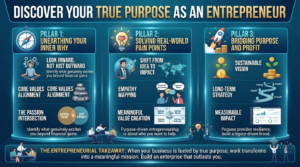
    5. The Five Pillars of Purpose Discovery

    Pillar 1: Your Gifts

    What comes naturally?

    Examples:

    • Teaching
    • Leading
    • Selling
    • Creating
    • Solving problems

    Pillar 2: Your Values

    What principles guide your decisions?

    Examples:

    • Integrity
    • Freedom
    • Excellence
    • Service
    • Growth

    Pillar 3: Your Experiences

    Often your greatest pain becomes your greatest purpose.

    Ask:

    What challenge have I overcome that could help someone else?

    Pillar 4: Your Audience

    Whom do you genuinely enjoy helping?

    Purpose becomes clearer when focused on a specific group.

    Pillar 5: Your Vision

    Imagine your life twenty years from now.

    What impact would make you proud?

    Action Exercise

    Draw five circles labeled:

    • Gifts
    • Values
    • Experiences
    • Audience
    • Vision

    Your purpose lives where they intersect.

    6. Finding Your Unique Human Potential

    Every individual possesses untapped abilities.

    Human potential includes:

    • Emotional intelligence
    • Creativity
    • Leadership
    • Communication
    • Strategic thinking
    • Resilience
    • Adaptability
    • Influence

    Unfortunately, many entrepreneurs operate far below their true capacity because limiting beliefs and fear keep them playing small.

    Practical Exercise

    Complete these sentences:

    People always ask me to help with…

    I lose track of time when…

    The world needs more…

    I believe…

    Patterns will emerge.

    Inspirational Quote

    “Your purpose is hidden inside your potential.”

    7. Aligning Purpose with Business

    Purpose without action becomes a dream.

    Business without purpose becomes exhausting.

    The goal is alignment.

    Ask Yourself

    Does my business:

    • Solve meaningful problems?
    • Reflect my values?
    • Allow me to use my strengths?
    • Create measurable impact?
    • Generate sustainable income?

    Example

    Instead of selling coaching sessions…

    Sell transformation.

    Instead of selling courses…

    Sell confidence.

    Instead of selling consulting…

    Sell clarity.

    People buy outcomes.

    Action Tips

    Create a Purpose Statement.

    “My business exists to…”

    Read it every morning.

    8. Overcoming Fear and Self-Doubt

    Fear often disguises itself as logic.

    Common fears include:

    • Fear of failure
    • Fear of criticism
    • Fear of rejection
    • Fear of success
    • Fear of uncertainty

    Purpose is stronger than fear.

    Practical Strategy

    Whenever fear appears, ask:

    What would my future self do?

    Then take one small action.

    Confidence follows action.

    Example

    Every successful entrepreneur once felt like an imposter.

    They succeeded because they acted anyway.

    9. Living Your Purpose Every Day

    Purpose isn’t discovered once.

    It is practiced daily.

    Create habits that reinforce it.

    Daily Purpose Routine

    1. Read your mission.
    2. Visualize your impact.
    3. Identify one meaningful priority.
    4. Help one person.
    5. Reflect each evening.

    Purpose grows through consistent action.

    Action Tips

    Protect time for:

    • Learning
    • Reflection
    • Service
    • Strategic thinking
    • Personal growth

    Small daily actions create extraordinary lives.

    10. Creating a Legacy That Outlives You

    The greatest entrepreneurs build more than businesses.

    They build movements.

    Ask yourself:

    If my business disappeared tomorrow…

    What would people remember?

    Legacy is measured not only by wealth, but also by the lives transformed, the leaders developed, and the communities strengthened.

    Build a Legacy Through

    • Mentoring others
    • Creating systems
    • Sharing knowledge
    • Developing leaders
    • Solving bigger problems
    • Contributing to society

    As Simon Sinek reminds us:

    “Working hard for something we don’t care about is called stress. Working hard for something we love is called passion.”

    Purpose transforms work into contribution.

    Common Mistakes to Avoid

    • Waiting for perfect clarity before taking action.
    • Confusing money with purpose.
    • Copying another entrepreneur’s journey.
    • Ignoring your strengths.
    • Pursuing opportunities that conflict with your values.
    • Letting fear dictate major decisions.
    • Chasing every new trend instead of staying mission-focused.
    • Failing to invest in personal growth.

    Your 7-Step Purpose Discovery Action Plan

    1. Reflect on your life experiences.
    2. Identify your top five strengths.
    3. Clarify your core values.
    4. Define your ideal audience.
    5. Write your personal mission statement.
    6. Align your business model with that mission.
    7. Take one purpose-driven action every day for the next 90 days.

    Remember:

    Purpose is not revealed through thinking alone.

    It is revealed through action.

    Frequently Asked Questions

    1. Can my purpose change over time?

    Yes. Your core values often remain stable, but your expression of purpose can evolve as your experience and opportunities grow.

    2. Is purpose the same as passion?

    No. Passion is an emotion that can fluctuate. Purpose is a long-term commitment to meaningful contribution.

    3. How long does it take to discover my purpose?

    For some, it arrives through a defining moment. For many, it becomes clearer through reflection, experimentation, and consistent action over time.

    4. Can I have multiple purposes?

    You may have multiple roles in life, but they are often connected by one overarching mission or theme.

    5. What if I still feel uncertain?

    Start by serving others with your current skills. Action creates clarity. Waiting rarely does.

    Summary

    Discovering your true purpose as an entrepreneur is not about finding a magical answer.

    It is about aligning who you are with what you do.

    When your gifts, values, experiences, and vision work together, your business becomes more than a source of income—it becomes a vehicle for meaningful impact.

    Purpose fuels resilience, inspires innovation, strengthens leadership, and creates sustainable success.

    The world needs entrepreneurs who lead with intention, serve with excellence, and unlock the highest potential in themselves and others.

    Ready to Unlock Your True Human Potential?

    Imagine building a business that is aligned with your purpose, powered by confidence, and driven by a mission that inspires both you and the people you serve.

    That is exactly what we help you achieve at the Institute of Human Excellence.

    Join Our FREE Human Potential Master Class

    In this transformational online session, you will learn how to:

    • Discover your unique human potential.
    • Eliminate limiting beliefs.
    • Develop an unstoppable entrepreneurial mindset.
    • Gain greater clarity about your life and business purpose.
    • Build confidence, resilience, and high-performance habits.
    • Create a practical roadmap toward meaningful success.

    Hosted by: Coach Raghava Reddy
    Human Potential Coach
    Institute of Human Excellence

    Reserve your seat today and take the first step toward becoming the entrepreneur you were created to be.

    Final Thought

    Your purpose is not hiding from you.

    It is waiting to be activated through courage, clarity, and consistent action.

    The world doesn’t need another entrepreneur chasing success.

    It needs more entrepreneurs creating significance.

    If this article helped you, share it with someone who wants to unlock their full human potential.


  • THE SUBCONSCIOUS CODE

    THE SUBCONSCIOUS CODE

    THE SUBCONSCIOUS CODE
    THE SUBCONSCIOUS CODE

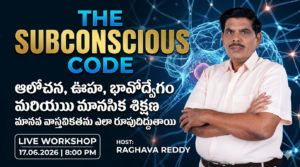
    🧠 THE SUBCONSCIOUS CODE

    మీ జీవితాన్ని నిజంగా ఎవరు నడిపిస్తున్నారు?

    మీ ఆలోచనలు?
    మీ ఊహలు?
    మీ భావోద్వేగాలు?
    లేదా మీ అవచేతన మనస్సు?

    ఈ ప్రత్యేక Live Workshopలో మన జీవిత ఫలితాలను ప్రభావితం చేసే Subconscious Mind యొక్క రహస్య కోడ్ గురించి తెలుసుకోండి.

    📅 17 June 2026
    🕗 8:00 PM IST
    🎙 Host: Raghava Reddy

    మీ మనస్సును మార్చండి.
    మీ అలవాట్లను మార్చండి.
    మీ జీవితాన్ని మార్చండి.

    Social Media Links

    Join my WhatsApp Group for Updates:
    https://chat.whatsapp.com/IUbhxUiFdlm5UJ9Uv7Ramb?mode=hqrt1

    Subscribe to My YouTube Channel and Learn more:
    https://www.youtube.com/@coachraghavareddy

    Follow me on Facebook
    https://www.facebook.com/coachraghavareddy

    Follow me On Instagram
    https://www.instagram.com/coachraghavareddy/

    #TheSubconsciousCode #LawOfAttraction #Mindset #SubconsciousMind #RaghavaReddy #TeluguWorkshop #PersonalDevelopment #MindPower #SuccessMindset #SelfGrowth #Manifestation

    subconscious mind, subconscious programming, law of attraction, law of attraction telugu,mindset coaching, mindset telugu, manifestation techniques, manifestation mindset, how subconscious mind works, wealth manifestation, success mindset, positive thinking, mental conditioning, mind power, psychology of success, nlp techniques, nlp coaching, self- improvement, personal development, mind reprogramming, attract wealth, attract opportunities, attract success, visualization techniques, creative visualization, belief systems, human potential, mindset transformation, life transformation, telugu motivation, telugu self help, telugu psychology, motivation telugu, raghava reddy, mindshift academy, thoughts create reality, power of imagination, emotional intelligence, success habits, subconscious code, manifestation  workshop, law of attraction workshop, mindset workshop, live workshop telugu, success principles, psychology coaching, goal achievement, mind mastery, self hypnosis, wealth consciousness.

  • How Neuro-Frequency Conditioning™ Can Improve Concentration and Memory in Less Than 30 Minutes

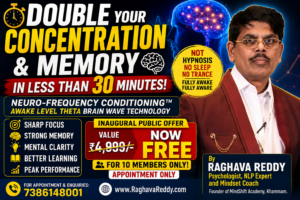
    Improve Concentration & Memory with Neuro-Frequency Conditioning™

    “Neuro-Frequency Conditioning session for concentration and memory improvement by Raghava Reddy”
    “Neuro-Frequency Conditioning session for concentration and memory improvement by Raghava Reddy”

    Unlock Your Brain’s Hidden Potential with Neuro-Frequency Conditioning™

    Have you ever walked into a room and forgotten why you went there?

    Do you struggle to concentrate while studying, working, or reading?

    Do you feel mentally exhausted, distracted, or overwhelmed by constant thinking?

    You are not alone.

    In today’s fast-paced digital world, millions of people are experiencing reduced concentration, mental fatigue, information overload, and poor memory retention. The human brain is under continuous pressure from stress, social media, multitasking, and emotional overload.

    But what if there was a way to condition your mind for better focus and sharper memory—without hypnosis, medication, or hours of meditation?

    Welcome to the world of Neuro-Frequency Conditioning™.

    What Is Neuro-Frequency Conditioning™?

    Neuro-Frequency Conditioning™ is an innovative mental conditioning approach designed to help improve concentration, memory, mental clarity, and cognitive performance using specific brainwave-based techniques.

    Unlike traditional hypnosis methods that may involve sleep, trance, or reduced awareness, this method works while you remain fully awake, alert, and conscious.

    The process is inspired by principles from:

    • Psychology
    • Neuroscience
    • Brainwave research
    • Neuro-Linguistic Programming (NLP)
    • Human performance conditioning

    The goal is simple:

    To help your brain enter an optimal state for learning, concentration, and mental performance.

    Understanding Theta Brain Waves

    The human brain operates through different electrical frequencies known as brainwaves.

    These include:

    • Beta Waves – Active thinking and problem solving
    • Alpha Waves – Relaxation and creativity
    • Theta Waves – Deep learning, memory processing, and subconscious access
    • Delta Waves – Deep sleep

    One of the most fascinating brain states is the Theta state.

    Research in neuroscience suggests that theta brainwave activity is associated with:

    • Enhanced learning
    • Creativity
    • Deep mental relaxation
    • Memory processing
    • Emotional integration

    Neuro-Frequency Conditioning™ utilizes an awake-level theta approach, meaning participants remain conscious and responsive while experiencing a deeply focused and mentally receptive state.

    This creates an ideal condition for mental conditioning and cognitive enhancement.

    Why Are Concentration and Memory Declining Today?

    Modern lifestyles are creating unprecedented levels of mental distraction.

    Common causes include:

    • Excessive screen time
    • Constant notifications
    • Stress and anxiety
    • Lack of sleep
    • Information overload
    • Multitasking habits
    • Negative thinking patterns

    When the brain remains overloaded for long periods, concentration weakens and memory retention suffers.

    Many people begin to experience:

    • Difficulty focusing
    • Forgetfulness
    • Mental fatigue
    • Reduced productivity
    • Overthinking
    • Lack of mental clarity

    The good news?

    The brain is adaptable.

    Through proper conditioning and mental training, it is possible to improve focus, clarity, and cognitive performance.

    How Neuro-Frequency Conditioning™ May Help

    Participants often report improvements in areas such as:

    • Concentration
    • Memory recall
    • Mental calmness
    • Learning ability
    • Emotional balance
    • Confidence
    • Mental alertness

    This method may be especially useful for:

    • Students
    • Competitive exam aspirants
    • Working professionals
    • Entrepreneurs
    • Public speakers
    • Lifelong learners
    • Individuals experiencing mental overload

    Not Hypnosis. Not Sleep. Not Trance.

    One of the unique aspects of Neuro-Frequency Conditioning™ is that participants remain awake and aware throughout the process.

    This is not stage hypnosis.

    This is not sleep induction.

    This is not loss of control.

    Instead, the method focuses on helping the mind shift into a more receptive and optimized mental state while maintaining awareness.

    The Future of Mental Performance

    We are entering an era where mental performance matters more than ever.

    In the future, success may depend less on physical strength and more on:

    • Focus
    • Adaptability
    • Emotional resilience
    • Learning speed
    • Cognitive flexibility

    Training the mind is becoming as important as training the body.

    Neuro-Frequency Conditioning™ represents a new direction in mental conditioning and human performance enhancement.

    Special Inaugural Public Offer

    To introduce this innovative method to the public, a limited number of complimentary sessions are now being offered.

    Offer Details:

    • Session Value: ₹4,999/-
    • Currently Offered FREE
    • Limited to 10 Participants
    • Appointment Required

    About the Author

    Raghava Reddy
    Psychologist | NLP Expert | Mindset Coach
    Founder of MindShift Academy, Khammam

    Raghava Reddy specializes in psychology-based transformation programs focused on mindset, peak performance, emotional mastery, and personal development.

    For Appointments & Enquiries:
    📞 7386148001

    🌐 Visit: RaghavaReddy.com

  • 3-day-mind-power-training

    Mind Power Training


    Master Your Mind: Join the 3-Day Mind Power Training (FREE for a Limited Time)

    What if the biggest barrier to your success isn’t your circumstances—but your mind?

    Most people try harder, push more, and stay busy… yet still feel stuck. They start strong but struggle to stay consistent. They know what to do, but don’t take action. The real issue is not effort—it’s untrained thinking patterns.

    That’s exactly what this 3-Day Mind Power Training is designed to solve.

    🧠 Learn Mind Power Scientifically with Psychology

    This is not motivational talk.
    This is a structured, psychology-based training led by Raghava Reddy, Psychologist, NLP Expert, and Mindset Coach with 25+ years of teaching experience.

    You will learn how your mind actually works—and how to use it consciously to create results.

    📅 Training Details

    • Dates: 08 May – 10 May 2026
    • Time: 7:00 PM – 9:00 PM (IST)
    • Mode: Live Online Webinar
    • Language: English
    • Investment: ₹4,999/- — FREE (Limited Time Offer)

    🚨 Why You Feel Stuck (And How This Training Helps)

    If you’ve ever experienced:

    • Overthinking and mental confusion
    • Lack of focus or clarity
    • Starting things but not finishing them
    • Self-doubt or fear of failure
    • Inconsistent action

    Then you’re not alone—and more importantly, you’re not broken.

    👉 Your mind simply hasn’t been trained to operate effectively.

    This training will give you practical tools to change that.

    🔥 What You Will Learn

    This program follows a step-by-step transformation framework:

    1. Mind Awareness & Control

    Understand how your thoughts are formed and how to take control of them.

    1. Mental Creation & Control

    Learn how your thinking patterns shape your results—and how to change them.

    1. Power, Action & Embodiment

    Move from thinking to doing. Build the ability to take consistent action.

    1. Subconscious Access & Creation

    Access your subconscious mind and reprogram it for success.

    1. Belief System Rewiring

    Identify and replace limiting beliefs with empowering ones.

    1. Integration & Life Design

    Bring everything together into a clear system to design your ideal life.

    ✅ Benefits You Will Experience

    By the end of this training, you will:

    • Gain clarity and control over your thoughts
    • Break negative thinking patterns
    • Develop emotional stability and confidence
    • Take consistent, focused action
    • Build a strong success mindset
    • Create a clear life direction and plan

    👤 About the Trainer

    Raghava Reddy is a Psychologist, NLP Expert, and Mindset Coach with over 25 years of experience in teaching and transformation.

    He specializes in helping individuals:

    • Break mental barriers
    • Rewire belief systems
    • Take consistent action
    • Achieve real, measurable results

    His training style is practical, structured, and focused on outcomes—not theory.

    ⚡ Limited Time Offer

    This is a premium training worth ₹4,999/-, currently offered FREE for a limited time only.

    • No recordings
    • Limited seats
    • Serious participants only

    Once this offer closes, it will return to a paid program.

    🎯 Who Should Attend?

    This training is ideal for:

    • Students and professionals feeling stuck
    • Entrepreneurs seeking clarity and focus
    • Anyone struggling with overthinking or inconsistency
    • Individuals committed to personal growth and success

    🚀 Take the First Step

    Your results in life are a reflection of your thinking.

    If you change how you think, you change how you act.
    If you change how you act, you change your results.

    👉 The transformation starts in your mind.

    🔗 Register Now

    Don’t wait for the “right time.”
    This is your opportunity to take control.

    Click here to register and secure your seat now.

    Final Thought

    You don’t need more motivation.
    You need a trained mind.

    Join the 3-Day Mind Power Training and start creating your life consciously.

    Register Now: https://www.blog.raghavareddy.com/learn-mind-power/